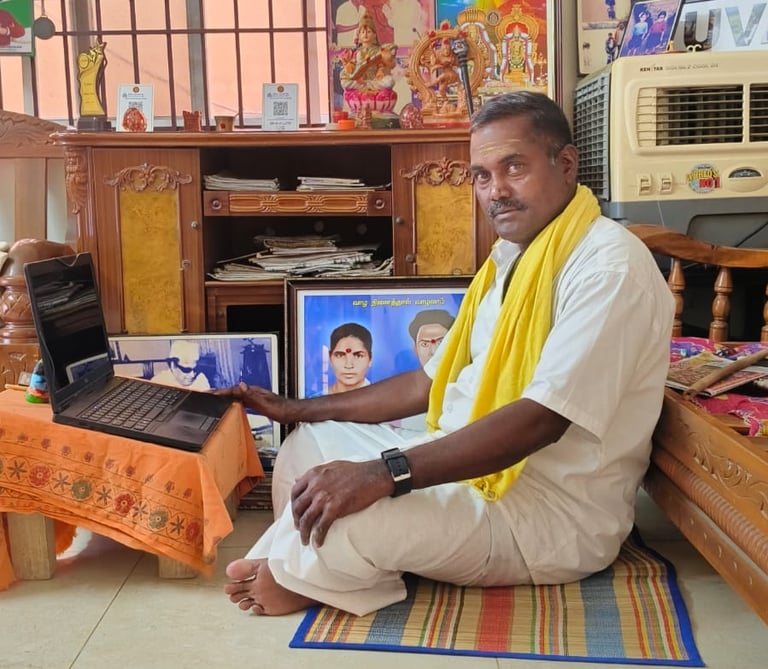
A serene ritual scene with a person offering water mixed with gingelly seeds to ancestral spirits at a traditional altar.

Sacred offering

Rituals

Moments from our sacred tharpanam ceremonies

A close-up of hands gently pouring water mixed with gingelly seeds as an offering during tharpanam.
A family gathered around a small altar, performing the tharpanam ritual with focused devotion.
Traditional vessels filled with water and gingelly seeds arranged neatly for the ancestral offerings.
An elder guiding younger family members through the steps of the tharpanam ceremony by the riverbank.
Soft morning light illuminating the ritual space where tharpanam is being respectfully conducted.

Common Questions

Who should perform Tharpanam?

Only those whose father has passed away can perform Tharpanam.

Which ancestors are honored?

Offerings go to three generations of paternal and maternal ancestors and their wives.

What if maternal grandfather is alive?

If your maternal grandfather is alive, Tharpanam is done only for your paternal lineage, not for the maternal side.

Water mixed with gingelly seeds is offered to the ancestors.

What is the main offering?
Why is it called Tharpanam?

Because it means an offering that truly satisfies the departed souls.